I found some tips and techniques on pinterest. If you want to paint outdoors, bring a spray bottle and lightly spritz your paint every once and awhile to keep your paints from drying out too quickly. Stencils are a great tool for making patterns. To make a smooth and soft stencil look, use the bottom of a make-up sponge. Glazing liquid and be mixed with your paint and applied over bright colors to push them back a layer.
Supports are simply what you paint on. It could be wood, canvas, or paper. Canvas and paper can be rolled up for transport, but wood does not wrinkle or fold.
Grounds act as a prep for your painting surface. It ensures you have an even surface and color to work with. It could be an acrylic gesso, painting gel, or a base layer of paint.
A make-up sponge, a mop brush, and an angled brush can be tools in painting and you can wash them after use with water. Rinse brushes, and some soap on the brush can help align the fibers and preserve the brush. Also, use a paper towel to blot brushes while in use to prevent water drops on your work.
Friday, August 29, 2014

Thursday, August 28, 2014
Hwk: 8/28 ACRYLICS!
Hwk: 8/28 ACRYLICS!
Today in class we will be stretching paper! You will need this in class on Tuesday. I am attaching links for you to reference in the future when stretching paper on your own.
On stretching paper:
http://painting.about.com/cs/watercolours/ht/Howto_WCstretch.htm
http://www.bing.com/videos/search?q=stretching+paper&FORM=HDRSC3#view=detail&mid=F6DBC3DD5911D4785A8CF6DBC3DD5911D4785A8C
You have 3 parts to your homework due for next Tuesday:
1. Think about your STILL LIFE PAINTING: what you want to portray (remember the intrinsic narrative in each object and what the combination of these different narratives forms). You can start on this as soon as you feel ready. These are DUE 9/25. BRING IN 4 OBJECTS FOR IN CLASS STILL LIVES (1. living/ used to be living 2. textured 3. shiny/ reflective 4. design/ pattern-based)
2. We will be discussing different techniques for ACRYLIC PAINTING, as well as different grounds, supports, and tools for putting paint on a surface. RESEARCH at least 3 painting techniques, 3 supports, 3 grounds, and 3 tools (as well as how to CARE FOR THESE TOOLS) for working with ACRYLIC. POST THIS with brief explanations (descriptions) for each to the blog.
3. BRING SUPPLIES for painting with ACRYLIC.
Read the following sites CAREFULLY, so you will know what you are working with next Tuesday!! This is an adventure for all, so remember everyone starts at the beginning. We will become much more familiar with what paint is and how it works as the semester progresses. Do not be discouraged at the start! As the adage goes: If at first you don't succeed, try try again! :)
http://www.bing.com/videos/search?q=intro+to+acrylic+painting&qs=AS&sk=&FORM=QBVR&pq=intro%20to%20acry&sc=4-13&sp=1&qs=AS&sk=#view=detail&mid=BC68B0276D2CB27C2EF0BC68B0276D2CB27C2EF0
http://www.ehow.com/how_5121453_make-acrylic-paints.html
http://www.goldenpaints.com/technicaldata/faq/iv_choosmed.php
http://www.paintmaking.com/extenders_fillers_driers.htm
http://painting.about.com/od/acrylicpainting/a/10tips_acrylics.htm
Today in class we will be stretching paper! You will need this in class on Tuesday. I am attaching links for you to reference in the future when stretching paper on your own.
On stretching paper:
http://painting.about.com/cs/watercolours/ht/Howto_WCstretch.htm
http://www.bing.com/videos/search?q=stretching+paper&FORM=HDRSC3#view=detail&mid=F6DBC3DD5911D4785A8CF6DBC3DD5911D4785A8C
You have 3 parts to your homework due for next Tuesday:
1. Think about your STILL LIFE PAINTING: what you want to portray (remember the intrinsic narrative in each object and what the combination of these different narratives forms). You can start on this as soon as you feel ready. These are DUE 9/25. BRING IN 4 OBJECTS FOR IN CLASS STILL LIVES (1. living/ used to be living 2. textured 3. shiny/ reflective 4. design/ pattern-based)
2. We will be discussing different techniques for ACRYLIC PAINTING, as well as different grounds, supports, and tools for putting paint on a surface. RESEARCH at least 3 painting techniques, 3 supports, 3 grounds, and 3 tools (as well as how to CARE FOR THESE TOOLS) for working with ACRYLIC. POST THIS with brief explanations (descriptions) for each to the blog.
3. BRING SUPPLIES for painting with ACRYLIC.
Read the following sites CAREFULLY, so you will know what you are working with next Tuesday!! This is an adventure for all, so remember everyone starts at the beginning. We will become much more familiar with what paint is and how it works as the semester progresses. Do not be discouraged at the start! As the adage goes: If at first you don't succeed, try try again! :)
http://www.bing.com/videos/search?q=intro+to+acrylic+painting&qs=AS&sk=&FORM=QBVR&pq=intro%20to%20acry&sc=4-13&sp=1&qs=AS&sk=#view=detail&mid=BC68B0276D2CB27C2EF0BC68B0276D2CB27C2EF0
http://www.ehow.com/how_5121453_make-acrylic-paints.html
http://www.goldenpaints.com/technicaldata/faq/iv_choosmed.php
http://www.paintmaking.com/extenders_fillers_driers.htm
http://painting.about.com/od/acrylicpainting/a/10tips_acrylics.htm
Pope - Composition

The medium used in this still life is oil based paint on canvas. The painting portrays various fruits, what appear to be pears, a lemon, and possibly an apple, alongside a very recognizable image of a human skull. These objects appear on a simple wooden table in a space that has been abstracted to the viewer. The fruits seem to be in decent condition, apart from the central piece which appears to have been bitten or quite decayed. The subject of this painting makes use of classic still life objects such as fresh fruit and cloth, but also includes the image of a human skull which connects the viewer to the idea of life and death. The focal point of the image is the human skull, which makes use of the rule of thirds by placing the skull to the left of the center line. The wooden table works to ground the image while the background is abstracted beyond recognition. The audience would likely be the French public or fine art fans of the late 1800's because of the painter's nationality.
Farrell -- Composition Homework
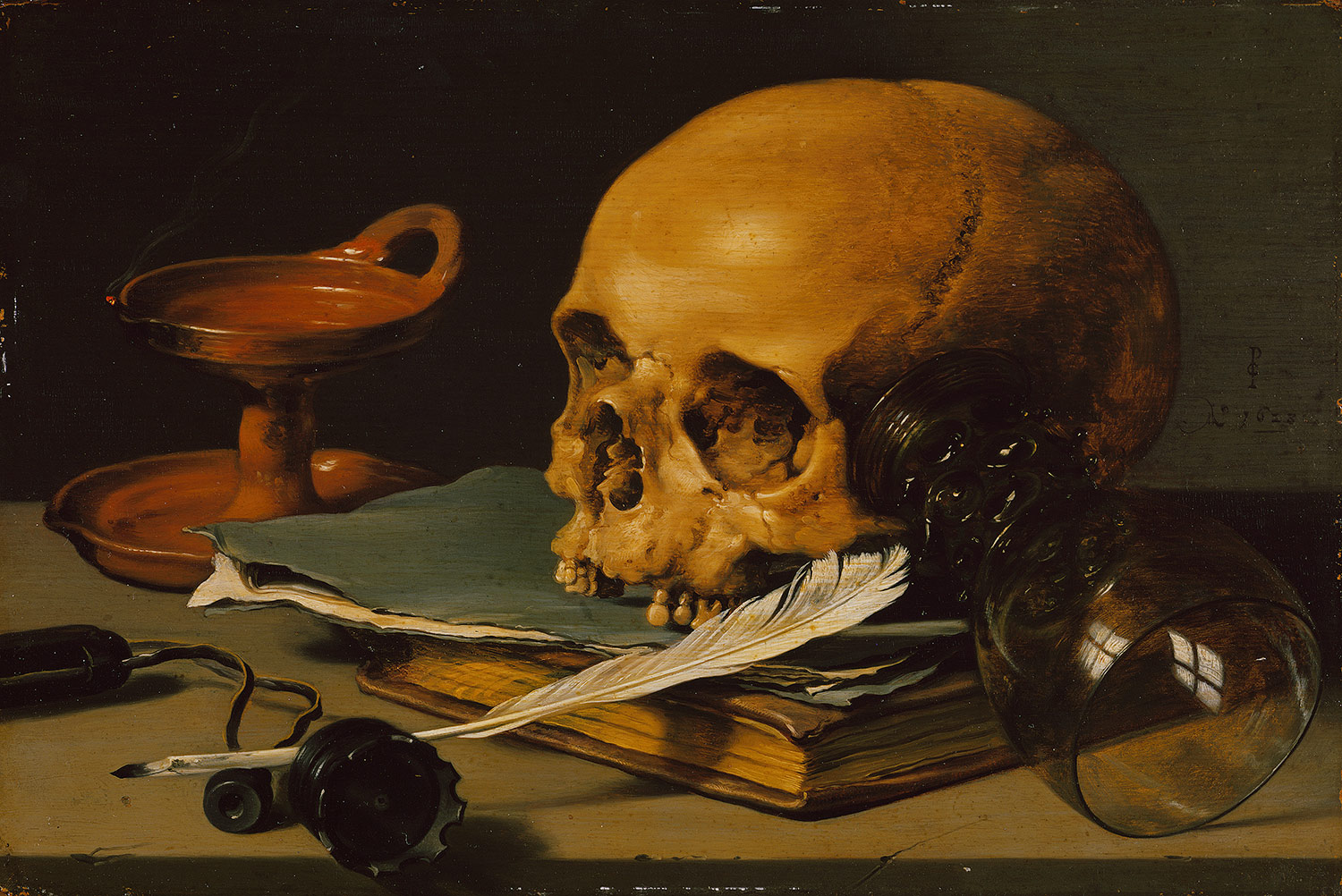
Still Life with a Skull and a Writing Quill, Pieter Claesz, 1628, Oil on Wood, 9 1/2" x 14 1/8"
1) What is the medium? Surface? Technique used?
The artist used oil paint and painted on a piece of wood. I don't know what techniques he used.
2) What are the OBJECTS or SPACE being portrayed and what is the condition of said objects/ space? What does this say about the socio-economic, age, education, religion, etc of the artist? Does the viewer need to know these things to be able to read the piece?
The objects the painter has shown are mostly easily recognized. The few things that I had a little trouble identifying where things that are not used in the form depicted anymore. I think that at the time this was painted anyone would have recognized the objects. I don't think that this composition reveals that much about the artist's background but as the viewer I don't need to know about the artist to read something in this piece.
3) What is being portrayed? What is the narrative?
All of the objects in the composition are either worn down or empty. This conveys a feeling of sadness or ending. It seems to me that something has happened to the person who was at this desk, because the lamp is almost out and the glass has been knocked over. The piece is sad because all I want to do is go in and stand things up, add more oil to the lamp and generally make is welcoming so that the person who was there will come back.
4) What are three compositional techniques used to help tell this storyline? Where is the focal point? Is there grounding? Foreground, background?
At first I wanted to say that the skull is the focal point and it still maybe, but for me the feather is the first thing I see because it is so bright compared to everything else. The feather is also placed in such a way that it leads you up to the skull and down towards the foreground and the object it is leaning against. The knocked over glass is also on a diagonal and so it also leads your eye through the composition. The glass leads you to the skull and beyond to the lamp in the background.
5) Who is the intended audience? Is this readable to a larger audience? Should the artist consider audience?
I don't know who the audience of this painting is but I don't think it makes to much of a difference because the composition is relatively simple and easy to read. The only way I can see someone having a hard time understanding this composition is if they don't know what the objects in the painting are, such as the lamp or the glass.
Maestas-- COMPOSITION
Rebekah Maestas
Still Life with a Skull and a Writing Quill, 1628
Pieter Claesz (Dutch, 1596/97–1660)
Oil on wood; 9 1/2 x 14 1/8 in. (24.1 x 35.9 cm)
Rogers Fund, 1949 (49.107)


Still Life with a Skull and a Writing Quill, 1628
Pieter Claesz (Dutch, 1596/97–1660)
Oil on wood; 9 1/2 x 14 1/8 in. (24.1 x 35.9 cm)
Rogers Fund, 1949 (49.107)
SEE COMPLETE RECORD  .
.
.
This is one of the earliest dated still lifes by Claesz., a Haarlem painter who gave extraordinary presence to familiar things. Here a skull, an overturned glass roemer with its fleeting reflections, an expired lamp, and the attributes of a writer suggest that worldly efforts are ultimately in vain.
The paintings of Robert Jackson are definitely a feast for the eye! His art appeals so much because it has a rare balance of clarity, playfulness and spirit.
Read more: http://afflante.com/7663-captivating-still-life-paintings-robert-c-jackson/#ixzz3Bhh2KS9i
Read more: http://afflante.com/7663-captivating-still-life-paintings-robert-c-jackson/#ixzz3Bhh2KS9i
1) What is the medium? Surface? Technique used?
~It's an oil painting done on wood.
~This one is oil on Canvas
~ The Robert C. Jackson painting was done with oil on linen.
2) What are the OBJECTS or SPACE being portrayed and what is the condition of said objects/ space? What does this say about the socio-economic, age, education, religion, etc of the artist? Does the viewer need to know these things to be able to read the piece?
~Peculiarly, the most charming part of history states the meaning of Vanitas which is a passage of Bible in revelations. Surprisingly, it means “vanity of vanities, everything or all is vanity”. The incredible idea behind was linked with people who love joy and pleasure in their life. They appreciated and adored those things which would add colors to their lives and give them the strong feeling of being wealthy or important. The chief aspect about vanity paintings lies in their reality which speaks of them as expensive and magical fanciful objects, wine goblets and musical instruments for pleasantness. These fancy paintings also remind people of the horrifying times such as hourglass or candle, death portraying human skull mostly. I think it does matter in some paintings like this one where there is so much being said with just objects places objectively. Would you have thought that the artist was talking about vanity just from looking at the objects? Most likely you would think of death because of the skull and the candle. Seeming like its represents the time we have in life before death.
~ The objects being portrayed are a wine bottle, two wine glasses, flower in a vase, grapes on a vine, something that could be cheese and the window with the view in the background. To me this says the artists takes a joy in fine wines and cheese. I couldn't find what it really represented, this is where knowing what the artists is like helps in interpreting their still life.
~"Poker Night", The paintings of Robert Jackson are definitely a feast for the eye! His art appeals so much because it has a rare balance of clarity, playfulness and spirit.The goal of the painter Robert Jackson is to take traditional conceptions and attitudes about still life painting and turn them completely different. The objects in his paintings aren’t just objects, the artist turns them into a composition of psychological drama, a war. The apples, for example, which the artist likes to portray, have a variety of symbolic meanings, it represents a man, a sin or salvation. If you add those symbolic meanings to these playful paintings you get a completely another sense of it.
3) What is being portrayed? What is the narrative?
~The last question i feel kind of answered what the narrative is. the First painting is about vanity, the second one to me is about enjoying a good wine and the third is just for fun. A lighthearted view on still lifes.
4) What are three compositional techniques used to help tell this storyline? Where is the focal point? Is there grounding? Foreground, background?
~The skull is the focal point, looks like a view finder was used, if you section the painting into thirds the skull would line up the the middle horizontal like and the foreground would be in the lower section of the horizontal section. There is unity in the objects in that your eye just flows through them. There is a flow, your eye starts at the skull and then moves down the wine glass to end up at the candle holder.
~There is unity in the wine painting, All the objects go together. A view finder was used you can see where the thirds are there is a base and the wine bottle is the right side of the the vertical section. there is a variety is shapes and size, nothing is the same size your eyes follows the slope from the top of the wine bottle to the thing that looks like it could be cheese.
~The underlying composition is obvious, its friends having drinks playing a game of poker. There seems to be more cool colors, to have a fun light mood about the playful painting. The focal point is the table or box that has the shot glasses and the beans. All the balloon dogs are focused on the middle of what is going on.
5) Who is the intended audience? Is this readable to a larger audience? Should the artist consider audience?
~I think all audiences are intended, when a painting is painted it was made to be seen by as many people can see it. People are going to be drawn to things that they are interested in. people who like darker things will be drawn to the first painting, those with like to drink wine would be drawn to the second and the third could be a variety of people from men who like poker and dogs. to kids who just like that there are balloon dogs and there is a fun aspect to it.
Wednesday, August 27, 2014
Morning-Star - COMPOSITION

(Daniel C. Chiriac, Still Life. Red Apples. 2013. 8 x 8. Oil on canvas.)
For the Red Apples still painting, the medium used was oil on canvas. The apples look pretty "ready-to-eat" fresh in the painting. There is no sign of aging or any evidence of decaying. They look like they were just bought at the supermarket and were placed on the table for this painting. On the artists website he noted he had trouble painting red objects but there isn't any evidence of his struggle. This makes me think the artist is older and a skilled artist. The apples take up a good portion of the piece. The artist used the placement of the apples effectively, where both negative and positive space is evenly balanced. The eye focuses on the apples when first looked at but, the apples don't overwhelm the piece, the viewer can look at it and focus on the other objects. The placement is aesthetically pleasing to look at it. To me, this painting makes me think of a house in the country and these apples are getting ready to be made into an apple pie. The painting gives me a southern cooking, cabin in the woods and old dog on the porch feel. I think i get this feeling because the artist could've placed the apples on a more modern looking table and it would've lost it's inviting tone because the lighting reflecting the browns on the table compliments the reds and yellows in the apples. There is a lot of lighting in this painting that gives the apples an almost whimsical feel. I think the artist intended this piece for any audience, it's pleasing to look at and apples are loved by pretty much every age group.

(Cornelis Norbertus Gysbrechts, Still Life. Vanitas. 17th century. Oil on canvas.)
For the painting Vanitas still life, the medium used is oil on canvas. This painting is pretty interesting because it appears as a whole completed piece and then what I didn't notice when I first looked at it; the painting appears to be a painting of a painting thats falling off its frame. The items used in this piece gives off an "ye olden times" feeling, even without looking at the century it was painted in because of the golden drinking mug, the candle and the items under the skull (I'm not sure what they are...) It's a bit of a morbid piece I guess you can say, the skull gives a grim look on the composition, but I think it's suitable for the time period. The two white dots in the background, whether intended or not, give the impression of eyes menacingly staring at the viewer. The objects used make me think the artist was well educated from a higher class family because the amount of gold in the picture, as well as the violin behind the skull. I get the feeling the artist is trying to portray what the higher class is like, it feels serious and I get an Edgar Allen Poe feeling. I'm assuming because of this, that the artist is an older gentleman. I'm unsure of the focal point because the eyes kind of dance around the painting. For me, they stop on the white "eyes", the skull and the piece of paper falling from the canvas, because there's a lot going on here and each item are filling their designated spaces fully. This piece feels more targeted towards an older audience rather than a younger one.

(Craig Shillam. Still Life, Sugar and Vice, 2012. Oil on canvas.)
For the final painting, the medium used is oil on canvas. On the artists website, he had an up close photo of his painting and the strokes he used were clean and compared to Van Gogh, thinly painted on the canvas. Even though the main focal point is the gumball machine, it doesn't overtake the rest of the objects. For example, when I look at this piece my eyes automatically go to the gumball machine, but when I keep looking at the painting, all the other objects create their own spot light and evenly add themselves to the gumball machine.The painting gives a whimsical feel, with how the artist picked the objects, the way the lights reflects and how colorful the painting is. The quality of the piece makes me think the painter is older but how the composition is makes me think the artist has kids of his own or even grandkids. Not to mention, the painter could be representing his inner child through the piece because of his color choices. I have a feeling the artist intended this piece for kids of all ages. There is no age restriction and it's effective for any audience.Though painted realistically, I get a comical pop art feel from this because of how gumball machines make me think of when I was a young girl but also the cute torn note at the bottom of the painting that says, "I love this :) ." I thought this effectively creates a painter to viewer relationship, it makes the piece more inviting and personal. The way the items are placed, also use both positive and negative space evenly. It's not too clustered, even with the gumballs on the table and it's not too empty because of relationship the items give each other. What really helps create a narrative for this piece is the relationship each item has. All items include a stand out color; the note with the blue writing, the yellow gumball machine with the colorful gumballs, the shot glass with the pink paper, the cigarettes? with the pink logo and the table with all on the objects on time. Looking at the piece a final time made me think of my own childhood, for example the gumball machine could represent the child surrounded by adult items like the cigarettes and the shot glass. I get a feeling of growing up too fast in this painting, because that's what I had to do. It's like me still wanting to be a kid even though i'm well into my twenties now and can no longer have that sort of whimsy. The viewer can take it either way but the message can be a positive one of whimsy or a serious one of longing.
Stanley--COMPOSITION
1) What is the medium? Surface? Technique used?
Georgia O’keeffe’s Oriental Poppy is painted with oil. She was
drawn to flowers.
2) What are the OBJECTS or SPACE being portrayed and what is
the condition of said objects/ space? What does this say about the
socio-economic, age, education, religion, etc of the artist? Does the viewer
need to know these things to be able to read the piece?
In Mary Cassatt’s Lilacs in a window, There is a vase with white
and purple lilacs sitting on what looks to be a window shelf. This is a vary
feminine painting, both the objects and how they piece is painted. The painting
is very light and airy. Without knowing much about the artist, it seems as
thought the artist is older and painting in leisure time. It is a very readable
painting There is little to need to put together and comprehend.
3) What is being portrayed? What is the narrative?
3) What is being portrayed? What is the narrative?
This painting seems to be just the beginning of
a lush, gorgeous garden—defiantly very feminine.
4) What are three compositional techniques used to help tell this storyline? Where is the focal point? Is there grounding? Foreground, background?
4) What are three compositional techniques used to help tell this storyline? Where is the focal point? Is there grounding? Foreground, background?
In Cezanne’s, Apples and Oanges, the white
cloth really helps the other colors pop and bring the attention to the apples
and oranges. If you think about it, this painting is really comprised of basic
shapes even though it may seem crowded and chaotic.
5) Who is the intended audience? Is this readable to a larger audience? Should the artist consider audience?
5) Who is the intended audience? Is this readable to a larger audience? Should the artist consider audience?
Cezanne’s piece seems to be very bland to an
audience. There is not too much to it in a deeper sense, but from previous knowledge,
I know that Cezanne was not looking to satisfy his audience, he was painting to
satisfy himself.


Georgia O’Keeffe, Oriental Poppy’s, 1928, Oil.
Mason - Composition
2) We are talking about NARRATIVE and COMPOSITION: Go through these links and think about your STILL LIFE PAINTING. What are you hoping to impart to your viewer, and how to you plan on achieving this?
I am hoping to put together an interesting collection of objects in an appealing manner, in such a way that provokes viewer thought into creating their own back story for the image. I would like to play with unusual composition and perhaps stylization.
3) Find three examples of well-done still lives. POST YOUR FAVORITE (with an artist statement if available) and answer the following questions:
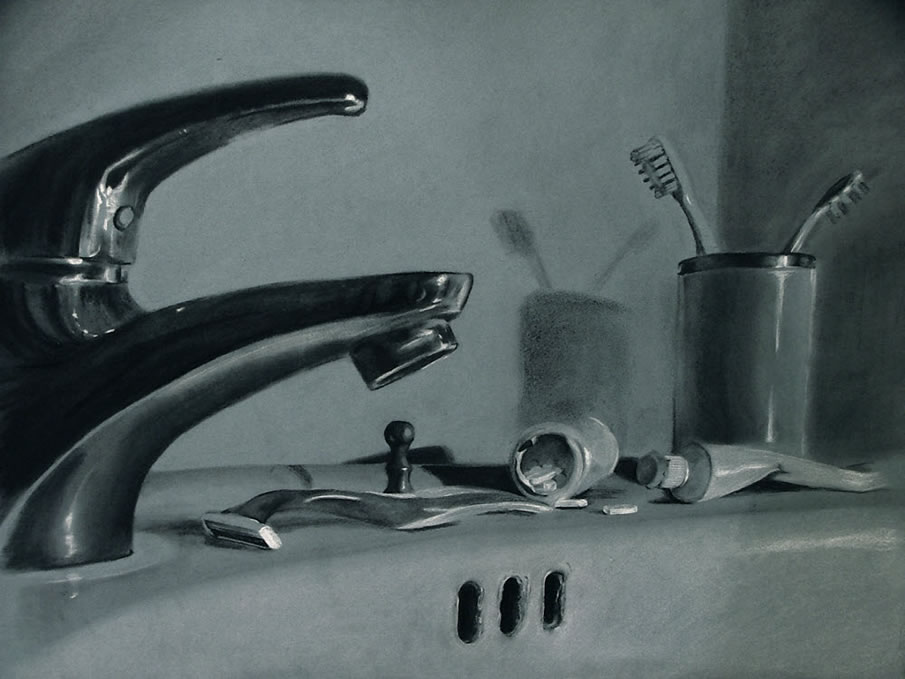
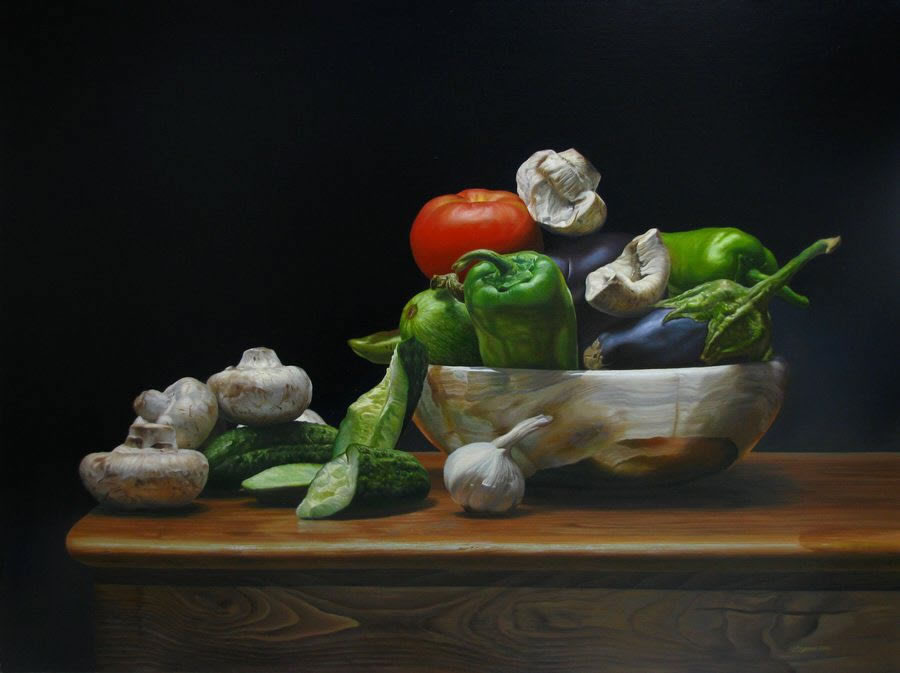
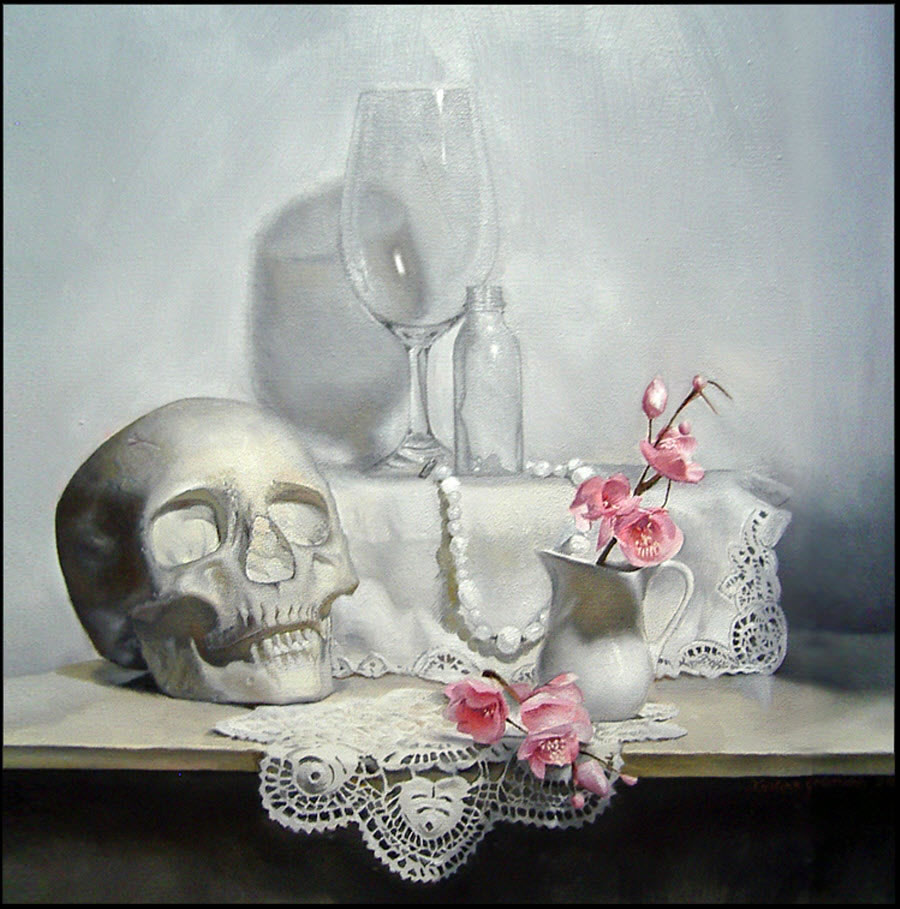
1) What is the medium? Surface? Technique used?
I am not entirely sure but I would guess that the 1st and 3rd paintings might be done with oils, while the 2nd painting possibly is done with acrylics.
2) What are the OBJECTS or SPACE being portrayed and what is the condition of said objects/ space? What does this say about the socio-economic, age, education, religion, etc of the artist? Does the viewer need to know these things to be able to read the piece?
3) What is being portrayed? What is the narrative?
4) What are three compositional techniques used to help tell this storyline? Where is the focal point? Is there grounding? Foreground, background?
5) Who is the intended audience? Is this readable to a larger audience? Should the artist consider audience?
In the first painting, we see what looks like a typical modern-day sink, with typical toiletries (toothbrush, razor, toothpaste, pills, etc). This tells me that this painting was likely completed fairly recently, perhaps within the last 10-20 years. The pills are scattered about, yet the other things are arranged neatly, so either the artist doesn't care too much about perfect tidiness, or leaves the pills out for convenience. I would also hazard a guess that the artist might be in their 30's or 40's, as teenagers and 20-something year olds rarely need daily medication (again, another guess that they are daily pills as the artist doesn't want to bother putting the lid back on the bottle). The painting of the vegetables looks very constructed, as if the artist purposely arranged the vegetables in such a manner to make them look interesting. It is interesting to see just how precariously the mushrooms are balancing on the peppers - it tells me the artist might enjoy a little bit of chaos, as the way the vegetables are arranged, they are in much more danger of falling off the pile or the table than in danger of looking boring. The last painting I thought was great as it is your typical still life with some glassware and flowers, and suddenly there is a skull amidst the pearls and lace. It really makes me wonder if the artist had this set up already in their home (it does look like a great table decoration and conversation starter), or if they only put it together for the purpose of the painting. Despite the skull, the arrangement makes it in such harmony that I wouldn't be surprised if the artist decided to leave it like that just for decoration to spruce up their home! The delicateness and color theme make me think of a feminine theme, and looks romantic despite skulls typically being associated with death.
Schoen - Composition
 (Vincent van Gogh, Still
Life: Vase with Twelve Sunflowers, 1888, oil)
(Vincent van Gogh, Still
Life: Vase with Twelve Sunflowers, 1888, oil) (Michelangelo Merisi da Caravaggio, Still Life with Fruit on a Stone Ledge, 1603, oil)
 (Ambrosius Bosschaert, Dead
Frog with Flies, 1630, oil on copper)
(Ambrosius Bosschaert, Dead
Frog with Flies, 1630, oil on copper)There is a dead frog on its back with three flies crawling next to it and one buzzes in the air above it. The frog seems to be recently dead with no signs of decomposition visible. I couldn’t find any sort of artist statement on this painting; however, I’m assuming Bosschaert was going against the grain of his time. Most of the still lives I found depicted fruit or flowers, pleasant things. Bosschaert’s Dead Frog jumped out at me simply because it is a dead frog on a counter. It is definitely unpleasant to look at for a moment, let alone the hours spent painting this. I think the artist wanted to make a statement about what could be put in a still life, not just pretty things, but ugly things as well. Although, it is not the middle of the painting, my focus keeps coming back to the one, black eye. There is no background, it is just a wall, but the frog is grounded on a counter that looks eerily like a slab. Values are varied in the painting, a square frame is used, and there are five objects total in the piece (an odd number). Bosschaert might have intended the audience to be the artist community, because of the point I previously mentioned.
Bork - Composition

The medium of this piece is oil paint on linen, using good techniques of blending and contrast when lights and darks are being represented. The objects in space appear to be an older looking basket ball, worn out shoes, a t-shirt/blanket, and perhaps a necklace with a chain. They are sitting on a table or ledge of some sort, with light dawning from their right side. Due to the appearance of an older looking basketball it can be assumed that the time period is much later, It could range anywhere from 1890-1930, although the piece was painted in 2011, so obviously the picture isn't that old.
The narrative could be viewed as someone who has just spent the day playing basket and has come home and taken off their shoes. Letting their basketball equipment take a breather for a few hours, as they took of a rather heavy feeling small chain from around their necks. The focal point is the basketball, the way the light shines on it is hard to miss, in the foreground is a slightly reflective lock in front of the basketball. Nothing is in the center, everything a bit off to the side which contributes to the rule of thirds, and the background shows us that there is perhaps a spotlight on the older ball. The audience for this picture could be anyone, though I would suggest maybe some of the older onlookers as they might better remember a time when such a basketball was regularly used.
Tuesday, August 26, 2014
Stanley--What is painting?
Does the act of painting necessarily result in
a painting? Are the two mutually inclusive? I feel like painting can end up
being very sculptural depending on what materials are used. If there are thick
materials used, the painting can end up being very thick, heavy, and bulky.
Does painting serve as the basis for other forms of art or stand on its own? Does it matter that we make a distinction? In my mind, this goes both ways. Many artist are beautiful delicate painters using only paint, and then on the other hand artists can add other bulky materials and it easily can turn into a sculpture with painting aspects.
Find three examples you feel best exemplify PAINTING with captions (artist, medium, date, size) and an explanation on WHY you chose these.

Jackson Pollock, Number 1, 1950 (Lavender Mist),1950
87x118 in, oil, enamel, and aluminum on canvas
I chose this piece because I
like the fact that this is an action painting and isn’t about the final
product. It’s about how it is made. The size of this painting is kind of
uncomprehendable.

William de Kooning was such a
perfectionist when it came to his paintings. Although these look very gestural,
he had a vision in mind and would stick to it. I like the color that he use.

Georgia O'Keeffe, Horse's Skull with White
Rose, 1931, Oil on canvas, 36 x 16 1/8 inches,
I chose this Georgia O’Keeffe
Painting because the black and white works so well. It makes the piece so
stunning. The shading makes the three dimensional.
Subscribe to:
Comments (Atom)